Pages

Tuesday, July 5, 2011

MedicalConspiracies- KANSAS: Drought - growing desperation - no planting season


In drought-hit Kansas, desperation is the only thing growing
Kansas.com
BY BECCY TANNER A stubble field lies dormant in the blowing sand and drought. Since last September, Morton County in far southwest Kansas has received 2.99 inches of moisture. The normal average rainfall for that corner of Kansas is about 19 inches. ...
See all stories on this topic »

In drought-hit Kansas, desperation is the only thing growing

34 Comments

BY BECCY TANNER

The Wichita Eagle

Photos

ELKHART — Mary Coen apologizes for her dusty house.

She tells a visitor not to look at the windowsill in her farmhouse living room where a layer of dust has settled from the last burst of wind.

“The Good Lord hasn’t let it rain,” she says.

This summer, it doesn’t take much for the wind to kick up sand in western Kansas.

A 10 to 15 mph wind will cause the horizon to dim; at 30 to 40 mph, it darkens the sky and visibility is less than a 100 feet.

Much of Morton County is in an exceptional drought, the driest rating, according to the U.S. Drought Monitor. Already it is drier than the driest years of the Dust Bowl.

Since last September — 10 months ago — Morton County near Elkhart has received 2.99 inches of moisture. The normal average rainfall for that corner of Kansas is about 19 inches.

There was no dryland wheat harvested in the county this year; more than three-quarters of the county’s acres are dryland.

Farmers are selling cow-calf operations in record numbers because there is not enough feed. Newborn calves, less than a day old, are on the auction block.

Roads have been closed due to drifting sand, blocking access to gas and oil wells and causing some companies to shut the wells down temporarily.

Spring crops that are planted — corn, grain sorghum and soybeans — are done so on irrigated lands, or in the hope of collecting crop insurance.

It is so dry many western counties have banned fireworks for fear they could set off massive grass fires.

“I’d describe this drought as very bleak,” said Morton County agricultural extension agent Tim Jones. “You can’t do anything. It is hot, dry and windy. We are at a complete standstill.

“You can’t do anything agriculturally unless you have water. The irrigated people are trying to make it work that way. But all the dryland crops and cattle are barely hanging on.

“Until it rains, there just won’t be anything happening.”

Last week, the U.S. Department of Agriculture issued a drought disaster declaration for 49 Kansas counties, nearly half the state.

The drought is so severe, it even caused the Kansas Legislature to ease some of the restrictions on western Kansas irrigators, acknowledging the drought is quickly eating up their yearly water allotments.

On Thursday, the Kansas Department of Agriculture Division of Water Resources (DWR) announced it would allow water right holders alternatives for additional pumping this year due to the ongoing drought.

“It’s bad,” said Kansas Secretary of Agriculture Dale Rodman.

“The sad thing is we’ve got water running out of our ears on the east side of the state,” he said, referring to flooding in some parts of eastern Kansas. “It is an ironic situation in a very weird year.”

Drought’s impact

Travel west across the state this summer and it is easy to see the drought’s impact.

Sedgwick County, which last month received nearly 5 inches of rain in parts of the county, is almost lush in comparison to, say, Reno County, which, in one area along U.S. 50 near Sylvia, has blowing sand in the ditches.

Quivira National Wildlife Refuge’s Big Salt Marsh in Stafford County is dry and cracked. It smells of death from hundreds of rotting fish.

West of Kinsley, the semblance of occasional green on the horizon gives way to dormant brown. Dust devils skirt dusty fields where rows of corn struggle to grow.

A large grass fire fed by winds in early April wiped out more than a dozen square miles west of Satanta and forced a temporary evacuation of the town. The remaining land now has an arid desert appearance.

In Morton County, the landscape is grim.

And it is here, the Coen family — four generations — has eked out a living from the land. This year, though, may be their last, says 41-year old Troy Coen.

“It is not our fault. It is not the bank’s,’’ he said. “But it all comes to a head this year.”

And it all hinges on rain.

Wind, fire and dust

Drought is nothing new to farmers in southwest Kansas.

During the 1920s, when rains came frequently and tractors were still relatively new, the prairie was turned into huge oceans of golden, waving wheat.

By the 1930s, when drought and wind set in, Morton County was the most devastated county of the Dust Bowl years.

Congress bought up some of the land from the county’s bankrupt farmers and, by 1960, the U.S. Forest Service was managing 108,175 acres of the Cimarron National Grasslands.

It is an area 30 miles long and 10 miles wide of shortgrass and sandsage prairie. It is dedicated to water conservation, wildlife management and cattle grazing.

Joe Hartman, a Cimarron Grassland District ranger who retired this past week, says he’s never seen a year quite like this one.

Some old-timers are comparing it to the droughts in the early 1950s, when large numbers of cow-calf operations were sold because there simply wasn’t the grass and feed to get through the year.

“I have never seen it on this large of a scale,’’ he said. “We’ve seen three major droughts in the last 10 years. This has been more of a continual drought.”

It’s been a decade of dry years, including three exceptionally dry years in a bad economy.

The dryness has had disastrous consequences for the grasslands.

Shortly after 8:30 a.m. on Mother’s Day — May 8 — a fire swept through the heart of the grasslands and neighboring land, wiping out 17,000 acres of prairie and cropland. It was fueled by 40 mph winds, gusting to 70 mph.

Although fire departments were called in from every surrounding county and state, “We weren’t able to stop it with ground equipment,” Hartman said.

Sparks from the fire would jump and fly over roads and windbreaks.

“We had to call in an air tanker. It came out of Arizona and took most of the day to fly up here and get loaded with retardant,” he said.

The fire exposed the sand and a month filled with 30 to 40 mph windy days have blown nearly 20 miles of roads shut. That has caused companies to shut down some oil and gas wells in the area because they can no longer get to the wells. Drifting dunes have spilled across fences and cattle guards.

“The biggest fear is that if we don’t get rain, it will just keep blowing,” Hartman said.

Already, blowing sand is drifting over plants. And what plant life is visible, the roots lie exposed to the winds, the sand cutting the roots.

In some areas, the farmland has been so scoured by the wind, it is down to hard crust.

Crops and cattle

Jones, the Morton County agricultural extension agent, grows somber when he talks about any future farming this year in his home county.

Some parts of Kansas have received more rain in a single night then huge tracts of Morton County has seen since fall.

“This time a year ago, we had a lot of moisture through the winter, but then it just turned off,” Jones said. “It stopped and it hasn’t started up again.

“We are so dry that whatever moisture we do get, it either absorbs pretty quickly or the next day we will get those 100 degree temperatures with the wind blowing at 30 to 40 mph and it’s gone.”

The farmers with irrigated wheat have already used up a quarter to a half of their water allotments, Jones said.

“Most people thought it was going to rain last fall, and it just didn’t,” Jones said.

“People didn’t water as much if they had irrigated ground. They put it off and put it off. And then, in February, when we got some warm weather, they turned the pumps on. And then they irrigated just about any day they could get water on it.”

Some of the irrigated fields yielded between 20 to 40 bushels to the acre, but “90 percent of the wheat crop has been written off; we will probably go higher,” Jones said.

Most of the livestock in the area is gone, he said.

“We’ve had folks cut their herds in half and have given themselves a timetable. In two weeks if we don’t have rain, they will sell so many. And, in another two weeks, they will sell so many more.

“And we’ve had other people realize their cow-calf operation isn’t going to work, and they have sold them.”

Brian Winter, manager of the Winter Livestock Auction in Dodge City — America’s largest independent cattle auction company and one of the nation’s oldest — said he also has never seen a year like this one.

“Normally, we’d sell 4,500 cattle in Dodge during the whole month; we’ll have 3,500 cows just this week,” Winter said.

“It is hard for people in Topeka, Wichita and even Salina to imagine because they have all had an abundance of rain. But we are not that far away — we are all Kansans and we are getting hurt out here.”

It has helped that some portions of the Conservation Reserve Program land has been released for grazing — but that’s only had a Band-Aid affect, Winter said.

“Ultimately, we have to have moisture. We can’t catch any kind of break,” he said.

The hardest hit areas of the drought cover not only the southwestern parts of Kansas but the Texas-Oklahoma panhandle, New Mexico and Colorado. The latest U.S. Drought Monitor shows 48 percent of Oklahoma in severe drought; Texas is at 63 percent.

“It’s scary how large of an area this is,” said Larry Steckline, a longtime farmer who owns the Mid-America Ag Network. “We need rain, bad and quick.

“This is going to change the cycle of the cattle feeding business. There won’t be near the number of cattle come off grass for feedlot use. It could affect the dinner table if the numbers of cattle don’t go to feed.”

As each of the individual farmers and ranchers sell off cattle, more and more newborn calves are being sold. Since April, beef cow slaughter rates from Arkansas, Louisiana, New Mexico, Oklahoma and Texas are up 125 percent, according to the U.S. Drought Monitor.

“Normally, we might have five to 10 calves in our Dodge City market per week at this time of the year,” Winter said. “Now, it’s 200 to 400 a week.”

Large herds, some that took three and four generations of farm families to create, are being sold and “when they sell the cow they were going to keep, that’s when it is all over.”

“This is affecting people’s lives — that’s the deal,” Winter said. “It’s uncontrollable. That’s what scares people.”

Finding water

The farther west you go, the more critical water becomes.

Irrigated land, fed by the Ogallala Aquifer, the sole source of water for much of western Kansas, is in demand.

“It is all fossil water out there. It is stored water from glacial runoffs,” said James Sherow, a history professor at Kansas State University and author of “Watering the Valley,” a history of the water rights fight over the Arkansas River.

“The recharge in that aquifer is nearly nonexistent — a quarter inch a year. It is a good thing these farmers are limited on what they can pump out or else it would be depleted faster.

“The whole economy relies on pump irrigation — it’s what supports corn, alfalfa and feed mills and feed lots out there.”

When the wind blows out where the Coen family lives north of Elkhart, Mary Coen says she can’t see out her window.

Troy Coen is hoping to survive next year by farming for other, larger farms.

“In our situation, this is our last hurrah if we don’t figure out something pretty quick,” he said.


Kansas.com
__._,_.___

MedicalConspiracies- Animal Cruelty exposed in undercover VID


WARNING:  VERY GRAPHIC.......
 
http://www.care2.com/greenliving/animal-cruelty-exposed-in-undercover-video.html
Animal Cruelty Exposed in Undercover Video
Care2.com
Mercy for Animals has released a new undercover video documenting various acts of cruelty against pigs on a very large pig farm in Iowa called Iowa Select Farms. If you are easily disturbed by such graphic images of animal abuse, you should not watch ...
See all stories on this topic »


Below is the cruel company:

Iowa Select Farms

www.iowaselect.com/ - Cached
Pork producing company. Includes company and staff profiles, industry news and employment application.

811 South Oak Street
Iowa Falls, IA 50126-9501
(641) 648-2328


_

MedicalConspiracies- WiFi continues to raise concerns ......


Wi-Fi dispute continues to raise concerns
Toronto Sun
By Kristy Kirkup ,Parliamentary Bureau A top American researcher has sharply criticized Health Canada for ruling out the potential human health risks linked to radiation from wireless Internet signals. Dr. David Carpenter, a renowned scientist who ...
See all stories on this topic »

Wi-Fi dispute continues to raise concerns 13


By ,Parliamentary Bureau

First posted:

OTTAWA - A top American researcher has sharply criticized Health Canada for ruling out the potential human health risks linked to radiation from wireless Internet signals.

Dr. David Carpenter, a renowned scientist who studies the impact of environmental contaminants, says Health Canada is acting irresponsibly as a government agency.

"It is disgusting," said Carpenter. "We have absolutely no evidence it is safe."

Canada's federal health agency maintains Wi-Fi is safe.

"We don't know the long-term effects of Wi-Fi," said Health Canada's top radiation researcher Beth Pieterson. "From all evidence we have today, there is no evidence based on international experts telling us that there is a cause for concern from exposure to Wi-Fi."

Some members of the world's scientific community say there is no way to know wireless Internet will not have an impact down the road.

Health Canada and the World Health Organization also seem to have a different understanding of a new radio frequency classification.

Wireless Internet -- Wi-Fi -- may be carcinogenic according to the World Health Organization but Health Canada says the specialized United Nations agency didn't make this finding.

The WHO's International Agency for Research on Cancer reclassified radio frequency emitted by "wireless devices" as a possible carcinogenic to humans in May. The study was based on a cell phone use but the IARC committee chair confirms the research can be applied to wireless Internet.

"The classification covers radio frequency electromagnetic radiation, which would include wireless," said Dr. Johnathan Samet said in an e-mail.

Health Canada says the classification doesn't include wireless.

"The studies that made the conclusion to go to the 2B possible classification were all with heavy cell phone users that use cell phones against their head and the strength of radio frequency in that situation is many, many times higher than anybody is exposed to from Wi-Fi or any of the other wireless technologies," said Pieterson. "You cannot make that direct link at all. Certainly in IARC's announcements, they didn't make that link at all either.

Canada's federal health agency claims it supports decisions made by the committee.

"Canada certainly supports WHO recommendations and the findings of IARC," Pieterson said.

Kristy.Kirkup@sunmedia.ca

Twitter: @kkirkup


__._,_.___

Monday, July 4, 2011

MedicalConspiracies- PLANNED DESTRUCTION in 2011?


-------- Original Message --------
Subject: WEATHER OR WEAPON
Date: Mon, 4 Jul 2011 22:22:54 -0700 (PDT)
From: <otto.....@yahoo.com>


  http://watch.pair.com/weather-modification.html#chemtrails  WEATHER  MODIFICATION A COVERT WEAPON OF MASS DESTRUCTION

PART 1

AN OVERVIEW OF WEATHER MODIFICATION IN THE USA

PART 1. OVERVIEW OF WEATHER MODIFICATION IN THE USA

Video Presentation: “Aerosol Crimes & Cover-Up”

Photos of Arkansas Chemtrails

“How To Wreck the Environment” by Gordon MacDonald

PART 2. THE PLANNED DESTRUCTION OF THE USA / SPRING & SUMMER OF 2011

PART 3. EXPERTS WARNING OF MISSOURI RIVER *FLOOD OF BIBLICAL PROPORTIONS*


MedicalConspiracies- SICKENING & SAD NEWS: Dogs for Dinner

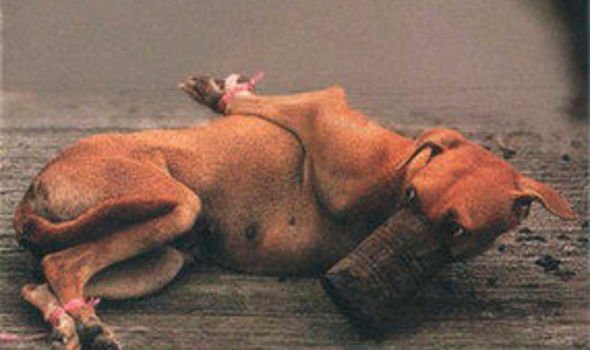
This poor female dog, must of recently had puppies and after caring for them she will die excruciating pain at the hands of man! her puppies may also go by the same torture! how sad... :'(  G
Is there an organization that will stop this torture?
________________________________________________________________


http://www.express.co.uk/posts/view/256492/Dogs-for-dinner


DOGS FOR DINNER
Express.co.uk
Half a million dogs a year die agonising deaths to satisfy the illegal market for their flesh despite the efforts of animal welfare campaigners and ...

DOGS FOR DINNER

Story Image


The dogs are muzzled with rusty tin cans

Sunday July 3,2011

By Geraint Jones and Stuart Winter

MUZZLED and caged, their eyes full of terror, these dogs are some of the lucky few, rescued from the brutal trade in dog meat that is becoming increasingly widespread in the Philippines.

Half a million dogs a year die agonising deaths to satisfy the illegal market for their flesh despite the efforts of animal welfare campaigners and government legislation outlawing the racket.

The dogs, many of them family pets, are snatched off the streets, their front legs trussed behind their backs and muzzled with rusty tin cans. They are packed in cages and driven hundreds of miles in vans in stifling heat to crude slaughter- houses where their throats are cut.

They end up in markets where they are sold to the public or in a growing number of restaurants with dog meat on their menus.

British-based charity Network For Animals says although the trade was outlawed in 1998, government inaction and police corruption have allowed it to expand.

Teams from the charity, acting in partnership with informants and officials, risk their lives to intercept vans on the way to slaughterhouses. They find the dogs in appalling conditions. The temperature inside the vans can reach 100F and many of the animals do not survive even after being rescued. For those that do, the charity works with the authorities to help them recover and be rehomed.

ì
Half a million dogs a year die agonising deaths to satisfy the illegal market for their flesh
î

It also funds local publicity campaigns highlighting the cruelty of the trade and the threat to people from the spread of rabies. Its 12-year campaign has led to the rescue of more than 3,000 dogs, the conviction of 86 dog meat traders, and the closure of 26 slaughterhouses, but it warns much more needs to be done.

Tory MP Mark Pritchard, chairman of the All Party Parliamentary Group for the Philippines, has raised the issue with Filipino authorities including the mayor of the capital city Manilla and now plans to lobby President Benigno Aquino.

He said: "This activity does a huge amount of damage to the Philippines' international reputation and I will be raising this issue with the president who must take action.

"Such pictures can have an influence on British tourists' decision to visit the Philippines which will impact on their economy. The authorities and police must act over this issue if the Philippines' international reputation is to be safeguarded." Eating dog meat is a long-standing northern Philippines tradition, connected with celebrations and rituals of mourning.

Historically, this accounted for a relatively small number of animals but over the past 25 years dog-eating has grown rapidly for commercial rather than cultural reasons.

It was banned nationwide in 1998, but though traders now face jail the trade continues to flourish.

A Network For Animals spokesman said: "Trussed dogs are crammed into wire or bamboo cages so tightly they are unable to move. The lucky ones forced against the bars of the cage manage to get some fresh air in the stifling heat. The dogs in the middle often suffocate or die of heat stroke.

"Conditions are so bad that 40 to 50 per cent die before they reach their destination. The dead animals are processed along with live ones for the markets and restaurants and are still profitable.

"Dogs are slaughtered in makeshift slaughterhouses, by being clubbed or having their throats cut while conscious."

Britain is one of the largest foreign investors in the Philippines and provides extensive aid as well as working with the Philippine government on human rights and other issues. Bilateral trade is worth about £1.6billion a year.


THE charity Network For Animals has compiled an online petition which can be signed on its website, networkforanimals.org.

It is also asking people to contact the Philippines authorities in Britain to urge their government to enforce the law that already prohibits the trade in dog meat.

Anyone wishing to do so should write to: Philippines Embassy, 6-8 Suffolk Street, London SW1Y 4HG. Tel: 020 7451 1800. Email: embassy@philemb.co.uk